The Gayatri and Vishnu Mantras
ఈ మార్గదర్శిక ప్రస్తుతం ఆంగ్లంలో మాత్రమే అందుబాటులో ఉంది.
A mantra is a sacred formula of sound — a word, a name, or a verse — repeated to gather and focus the mind and to invoke the presence of the divine. In Hindu practice, sound itself is held to be powerful, and the careful repetition of a mantra is one of the oldest and most trusted spiritual disciplines. Two bodies of mantra are especially important in many households: the Gayatri and the great mantras of Vishnu.
These two together cover much of daily devotional chanting — the Gayatri as a universal prayer for inner light, and the Vishnu mantras as the heart of Vaishnava and Venkateswara worship. This guide introduces both, along with the etiquette that traditionally surrounds the chanting of mantra.
The Gayatri mantra
The Gayatri is among the most revered verses of the Vedas, a prayer addressed to the radiant power behind the sun, asking that it illuminate and awaken the intellect. Rather than petitioning for any worldly gain, it asks for clarity of mind and the light of understanding — which is why it is cherished across so many traditions as a universal prayer.
Traditionally the Gayatri is chanted at the junctions of the day — at dawn, at noon, and at dusk — as part of the sandhya rituals. It is often the first mantra a person is formally taught, and many chant it daily throughout life. Its rhythm and structure are precise, and it is valued as much for the steadying effect of its sound as for the meaning of its words.
The Vishnu mantras
For devotees of Vishnu and Venkateswara, a small group of mantras stands at the centre of practice. The dwadasakshari — the twelve-syllable "Om Namo Bhagavate Vasudevaya" — and the ashtakshari, "Om Namo Narayanaya," are among the most beloved, each a salutation of surrender to the Lord. The simple name "Govinda," familiar from Tirumala, belongs to the same family of devotional invocation.
These mantras are at once simple and profound: easy to learn and to repeat, yet held to carry the whole of the Lord’s presence within them. For Venkateswara devotees they are the natural choice for daily japa, woven into morning worship, counted on a mala, or repeated quietly through the day as a constant turning of the heart toward the Lord.
The etiquette of chanting
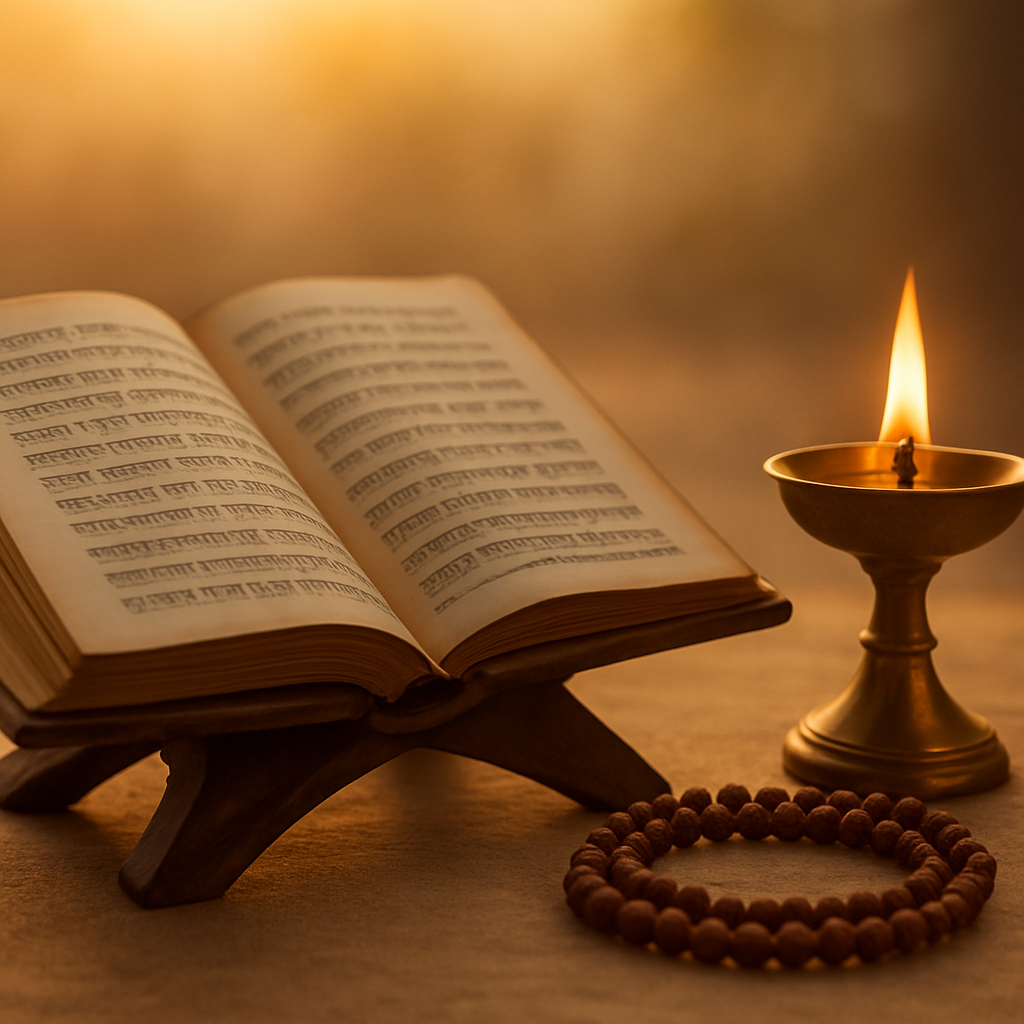
Mantras are traditionally chanted in a state of cleanliness and composure — with washed hands, a settled posture, and a calm mind, often in the early morning after bathing. Many devotees count their repetitions on a mala, both to keep track and to steady the attention, and chant at a regular time and place so the practice takes root.
Some mantras are considered general and freely chanted by anyone, while others are traditionally received from a teacher through initiation, or diksha, which is held to transmit the mantra’s living power. When in doubt, the simple names and salutations of the Lord — "Om Namo Narayanaya," "Govinda" — may be chanted freely and with full devotion, and are a complete practice in themselves.