A Pilgrim's Guide to Tirumala
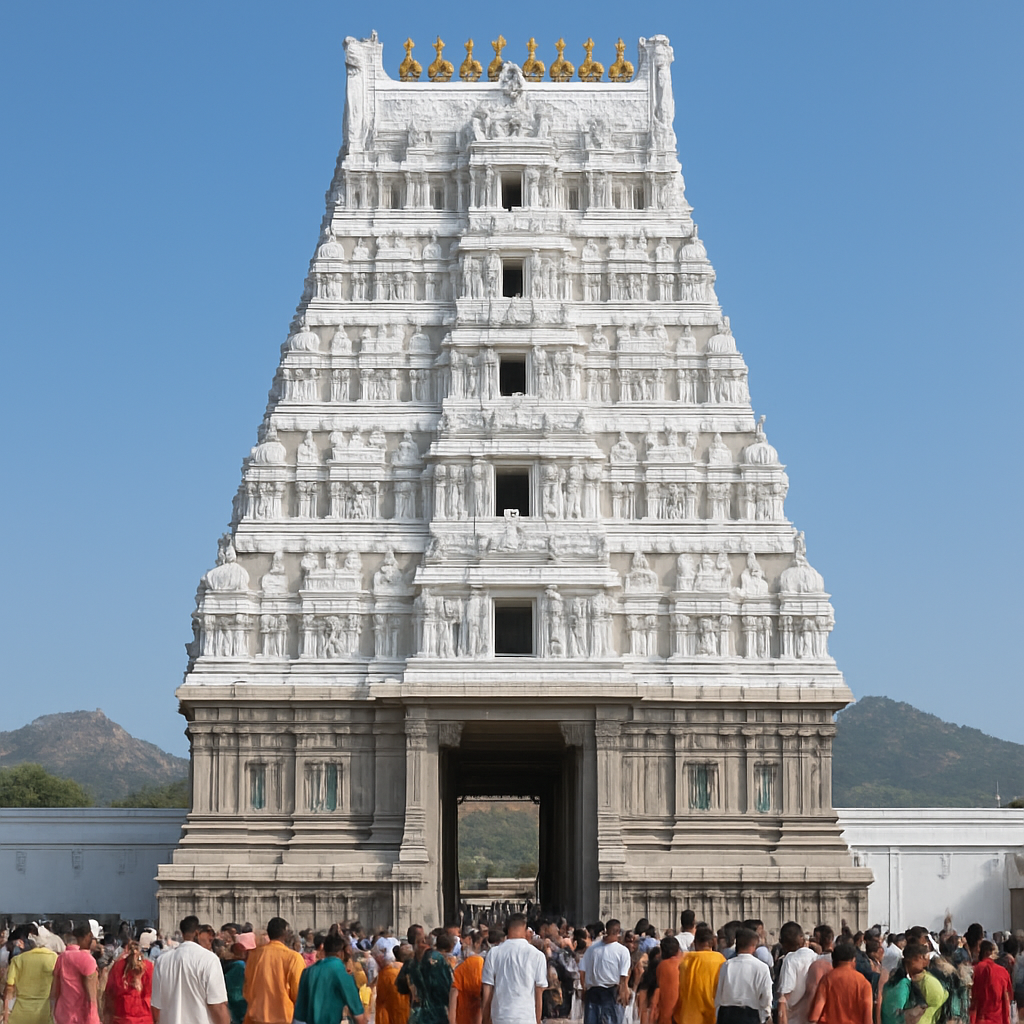
A pilgrimage to Tirumala is a lifelong aspiration for many devotees of Lord Venkateswara — for some, the culmination of years of vows and saving. Knowing what to expect makes the journey smoother, less bewildering amid the immense crowds, and ultimately more meaningful.
This guide provides a general overview of how pilgrims reach the temple, the darshan options available, and the customs of the temple town. It is informational only; for current timings, fees, and booking procedures always consult the official temple administration before travelling.
Reaching the temple
Tirumala sits atop the Seshachalam hills above the town of Tirupati. Most pilgrims travel up by road via the ghat road that winds through the forested hills. Many, however, choose to climb on foot by one of the two traditional footpaths — Alipiri, the longer and older route of thousands of steps, or the steeper Srivari Mettu.
The climb on foot is itself considered an act of devotion, a vow fulfilled step by step with the chant of "Govinda" easing the ascent. Pilgrims who climb often do so barefoot, applying turmeric and kumkum to the steps along the way as an offering.
Darshan
There are several ways to take darshan, from the free Sarva Darshan queues open to all, to special-entry and arranged-seva options. Each balances waiting time against access, and during festivals and weekends the numbers can be enormous, with waits running to many hours in the queue complexes (vaikuntam) built to shelter waiting pilgrims.
Patience is an inseparable part of the experience. The brief moment of darshan in the sanctum — often just seconds before the deity amid the press of the crowd — is the goal toward which the whole long wait is directed, and devotees regard the waiting itself as part of the offering.
Customs and prasadam
Many devotees fulfil a vow by offering their hair at the Kalyana Katta tonsure halls — a gesture of surrendering one’s ego and vanity to the Lord. It is a custom practised by pilgrims of every background and is among the most recognisable images of Tirumala.
After darshan, pilgrims receive the celebrated Tirupati laddu as prasadam, a sanctified sweet prepared in the temple kitchens and carried home as a tangible blessing. Many also visit nearby shrines, especially the temple of Padmavati, the Lord’s consort, at Tiruchanur — a visit traditionally considered to complete the pilgrimage.
Practical notes
Dress modestly and traditionally, as the temple expects; carry as little as possible, since security is strict and many items are not permitted inside. Footwear is removed well before the sanctum, and the long walk on stone can be hard underfoot, so plan accordingly.
Because timings, darshan slots, accommodation, and rules change and are managed centrally, always verify current details with the official temple administration when planning your trip rather than relying on general descriptions.