Fasting Traditions Explained
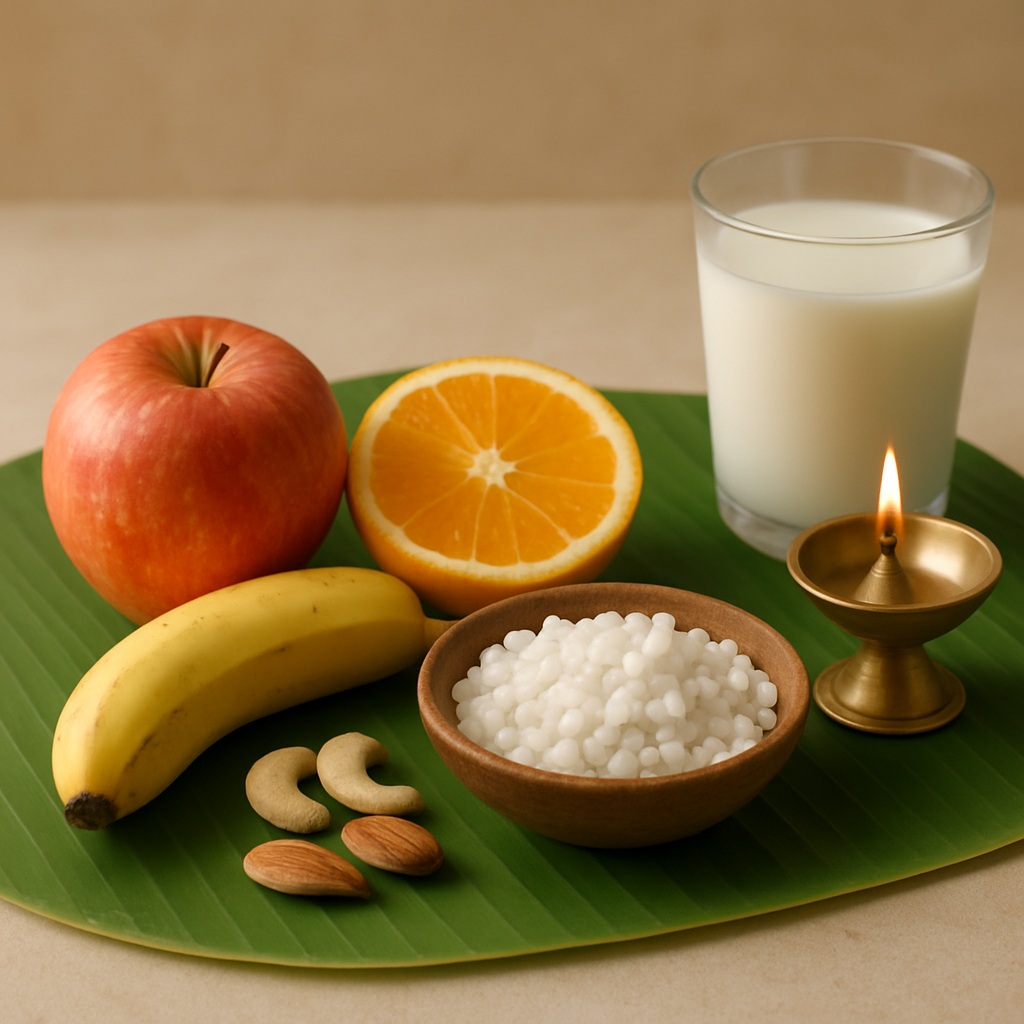
Fasting, or upavasa, is among the most widespread of devotional practices, observed in countless households on fixed days of the week and month. Yet it is widely misunderstood as mere abstention from food. In its true spirit it is far more — a discipline that turns the body’s hunger into an aid for the mind’s devotion.
This guide explains what a vratam (vow) of fasting actually means, the common observances devotees keep, who should and should not undertake them, and the mindful manner in which a fast is broken.
What upavasa means
The Sanskrit word upavasa is revealing: it combines upa ("near") and vasa ("to dwell"), suggesting "dwelling near" or "staying close" to the divine. The point of the fast, then, is not the empty stomach but the nearness it is meant to foster — by lightening and disciplining the body, fasting frees the attention for prayer, reflection, and remembrance of God.
Understood this way, a fast that is kept grudgingly or merely as a rule misses its purpose, while even a simple fast kept with devotion fulfils it. The abstention is a means; closeness to the divine is the end.
Common observances
Several days recur in the fasting calendar. Ekadashi, the eleventh lunar day, falls twice a month and is especially important for Vishnu devotees. Pradosham is observed by devotees of Shiva, and Saturdays (Shanivar) are widely kept by devotees of Venkateswara and of Hanuman and Shani.
The form of the fast varies widely. Some keep a complete fast taking only water; others take a single simple, sattvic meal, or eat only fruit and milk, or avoid specific foods such as rice or grains on Ekadashi. The practice is meant to be adapted to one’s capacity and tradition rather than followed as a single rigid rule.
Who should fast — and breaking the fast
Fasting is a voluntary discipline, and tradition is sensible about it: the very young, the elderly, the unwell, pregnant women, and those who must do hard physical work are not expected to keep strict fasts, and may observe a lighter form or simply eat sattvic food. Devotion, not bodily strain, is the aim.
A fast is broken just as mindfully as it is kept. It is concluded at a prescribed time — often the following morning within a particular window (the paranai for Ekadashi) — and broken gently with simple, light food and a spirit of gratitude rather than with a heavy meal. This careful ending preserves both the health of the body and the devotional spirit of the observance.