Govinda Namalu Explained
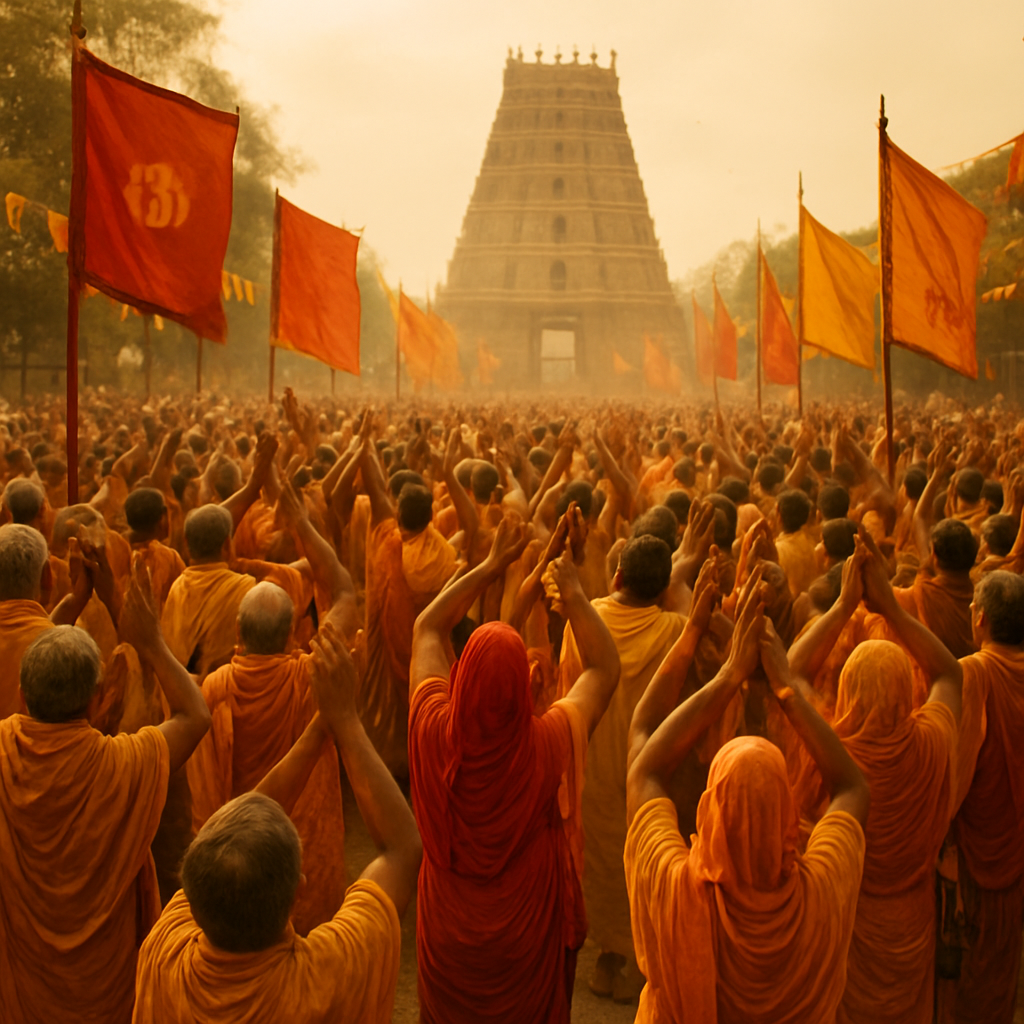
At Tirumala, the air rings ceaselessly with cries of "Govinda! Govinda!" For anyone who has visited, it is the unforgettable signature sound of the place — rising from the footpaths, the queues, and the temple itself, carried by the voices of thousands at once. The Govinda Namalu is the litany of the Lord’s names from which this great chant flows.
Far from being a mere crowd-cry, the chant is a devotional practice in its own right, with deep meaning and a long tradition. This guide introduces the Govinda Namalu, the meaning behind it, and why it occupies such a central place in the devotion of Tirumala.
The call of Govinda
Govinda is one of the most beloved names of the Lord, associated with Krishna as the protector of cows and, by extension, the protector and nourisher of all. To call out "Govinda" is itself an act of devotion — a spontaneous turning of the heart toward the divine that requires no ritual, no qualification, and no preparation.
For the pilgrim, the call serves a very practical spiritual purpose too. Through the long hours of climbing and waiting for darshan, repeating "Govinda" keeps the mind anchored to the Lord rather than drifting to fatigue or impatience. The chant transforms the wait itself into worship.
The Namavali
Behind the simple cry lies the fuller Govinda Namavali — a garland of names and epithets of Venkateswara, each praising a particular aspect of his glory, his grace, his beauty, and his deeds. Recited in sequence, often in a rolling call-and-response, the names build into a sustained hymn of praise.
Each name opens a small window onto the Lord: his presence on the seven hills, his relationship with Lakshmi and Padmavati, his role as protector and refuge. To chant the Namavali is to recall and celebrate these qualities one after another, so that praise and remembrance flow together.
A shared devotion
The Govinda Namalu is most powerful when chanted together. When thousands of pilgrims raise the names in unison, the individual voice is taken up into a vast collective sound, and the chant becomes an expression of shared faith that unites the entire gathering across every difference of language, region, and background.
This communal dimension is part of what makes Tirumala’s atmosphere so distinctive. The chant binds strangers into a single body of devotees, all moving toward the same darshan with the same name on their lips — a vivid experience of devotion as something held in common.