How to Perform Abhishekam at Home
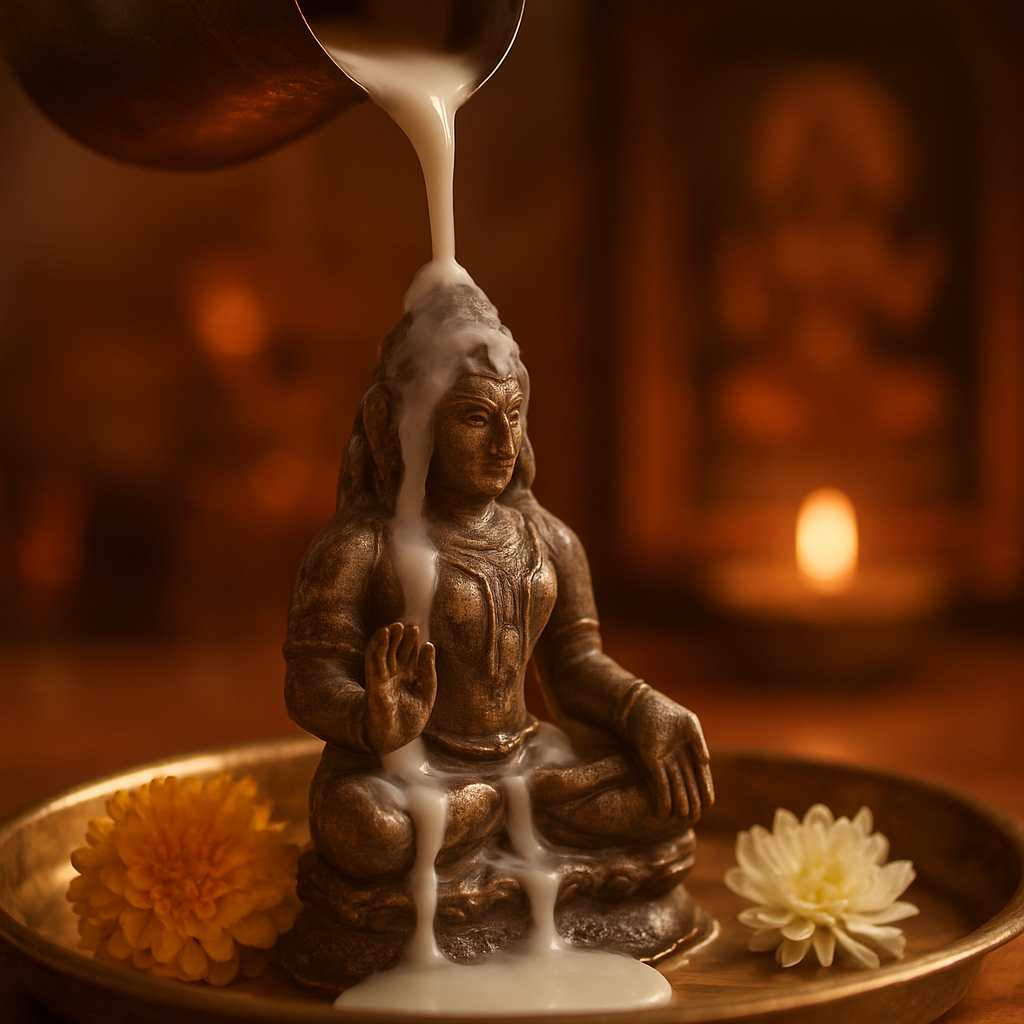
Few forms of worship are as loved, or as visibly tender, as abhishekam — the ceremonial bathing of the deity. To pour milk, honey, and water over the sacred image, murmuring the Lord’s name, is to treat the divine with the same intimate care one would offer an honoured guest or a beloved child. It is devotion made tangible, expressed through the hands.
Performed in grand form at temples, abhishekam can also be carried out simply and reverently at home. Done with the right understanding, it becomes one of the most rewarding of household rites. This guide outlines the substances used, the order in which they are offered, and how to perform a home abhishekam respectfully and safely.
The substances
The classic offering is the panchamrit — literally the "five nectars" — comprising water, milk, curd, honey, and ghee. Each is poured gently over the deity in turn while a mantra is recited, the flow itself an act of reverence. Many households add further offerings such as coconut water, sandalwood paste, or rosewater, but the five form the traditional core.
Each substance carries its own meaning and beauty: milk for purity, honey for sweetness, ghee for richness and light. Together they express the abundance the devotee wishes to pour out before the Lord. The substances should be fresh and clean, prepared with the same care one would bring to food offered to a guest.
The order
Abhishekam follows a traditional sequence rather than a single pour. A common order begins with pure water, then milk, then curd, honey, and ghee, with a gentle rinse of clean water between each so the next substance meets a clean image. The deity is then given a final bath of water and carefully dried.
Throughout, the pace is unhurried and the attention steady, each pouring accompanied by the chanting of a mantra or the Lord’s name. Once the bath is complete, the deity is re-adorned — fresh clothes or a clean cloth, sandalwood, kumkum, flowers — and the worship continues with lamp and offering. The re-adorning is as much a part of the rite as the bathing itself.
Doing it safely at home
Abhishekam is suited to murtis of metal or stone and to Salagramas, which can be bathed without harm. It is best avoided for images of clay, painted plaster, or paper, and for mounted pictures, which the substances would damage. Always perform the rite over a suitable tray or vessel that catches the offerings cleanly.
Keep the practice modest and within your understanding: a simple panchamrit abhishekam on an auspicious day — a Saturday, an Ekadashi, or a festival — is a complete and beautiful offering. The more elaborate temple forms, with their long sequences and specialised mantras, are best left to temples or undertaken under the guidance of an elder or priest. What matters most at home is cleanliness, care, and devotion.