Morning Puja: A Simple Routine
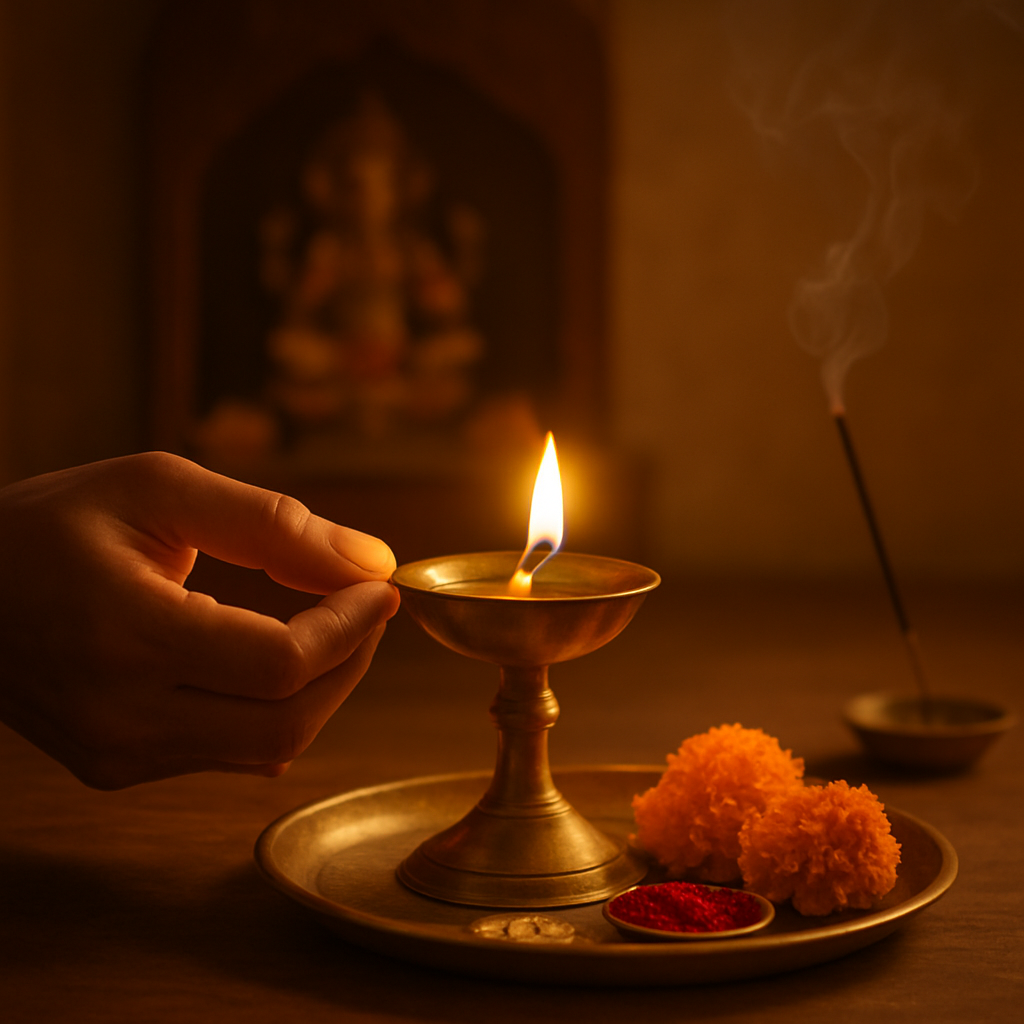
Daily worship does not need to be long or elaborate to be meaningful. A short, sincere morning puja — even ten focused minutes — can anchor the whole day, settling the mind before the demands of work and family begin. The tradition’s most elaborate temple rituals and the simplest home puja share the same underlying logic; the home version simply condenses it.
This guide offers a routine that a beginner can follow from the first day and gradually expand as it becomes familiar. The aim is consistency over grandeur: a small practice kept faithfully will do more for your devotion than an ambitious one abandoned after a week.
Preparation and timing
Begin with cleanliness, which the tradition treats as the threshold of worship. Bathe and wear clean clothes, then wipe down the shrine, refresh the water, and arrange your offerings within reach. Light a lamp and an incense stick to mark the start.
Many devotees favour the early hours of Brahma muhurta — roughly the ninety minutes before sunrise — when the household is quiet and the mind is naturally calm and receptive. If that is not practical, simply choose a consistent time you can keep each day. Regularity is itself part of the discipline.
Setting the intention (sankalpa)
Before the offerings, take a moment to settle and form a simple sankalpa — a quiet statement of intention. This can be as plain as acknowledging the day, the place, and your wish to worship with sincerity. The sankalpa turns a sequence of actions into a deliberate act of devotion rather than a routine performed by habit.
The core offerings
A simple puja offers, in turn, water (for the deity to drink and to wash), flowers, the light of the lamp, fragrant incense, and a small naivedya — a food offering, even just a piece of fruit or a few grains of sugar. Each offering is made with a prayer or the deity’s name.
This sequence is a condensed form of the traditional shodashopachara, the sixteen honours offered to an honoured guest. Understanding the offerings this way — as hospitality shown to the divine guest in your home — gives the simple acts their depth. As your practice matures, you can add more of the upacharas; the short form remains complete in itself.
Closing with aarti
Conclude with aarti, gently circling the lit lamp before the deity while reciting a short hymn or the Lord’s name. Then sit for a moment of quiet gratitude — this brief stillness at the end is often the most valuable part of the whole practice.
Finally, distribute the prasadam, sharing the blessed offering with the household. Carrying that small token of the morning’s worship into the day is a fitting close, linking the shrine to the life that unfolds beyond it.