Padmavati and the Divine Marriage
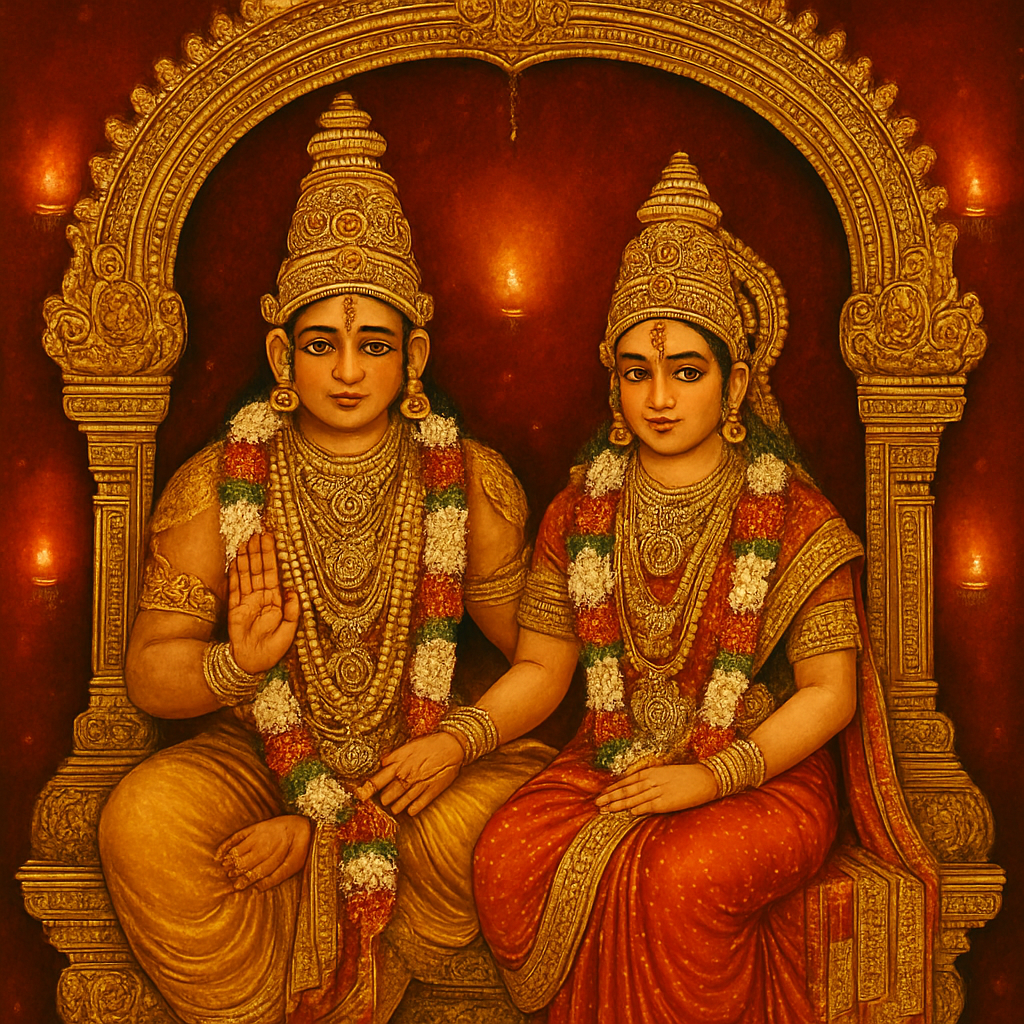
The legend of Lord Venkateswara’s marriage to Sri Padmavati is central to the lore of Tirumala. It is the story that explains why the Lord came to dwell on the seven hills, why his devotees offer so generously, and why one of the temple’s most beloved rituals takes the form of a wedding.
More than a tale, it is a living theology of love, debt, and grace. This guide tells the story of Padmavati, the divine marriage, and the customs that flow from it.
Who is Padmavati
Sri Padmavati, also lovingly called Alamelu Manga, is worshipped at her own temple in Tiruchanur, a short distance from Tirupati. She is regarded as a form of the goddess Lakshmi, the consort of Vishnu, born on earth and discovered, in the legend, in a golden lotus.
Her temple is a major pilgrimage site in its own right, and tradition holds that a pilgrimage to Tirumala is considered incomplete without also visiting Padmavati at Tiruchanur. To honour the consort is to honour the divine couple as a whole.
The divine debt
According to the legend, when Venkateswara was to marry Padmavati, he lacked the wealth for a wedding befitting the occasion and so borrowed an enormous sum from Kubera, the god of wealth. The marriage was celebrated in splendour — but the debt remained.
It is said that the Lord is repaying this loan to this day, and will continue until the end of the age. This belief gives a striking meaning to the offerings made at Tirumala: when devotees give gold, money, and their shorn hair, they understand themselves to be helping the Lord settle his wedding debt — and in return he showers them with grace.
Kalyanotsavam
The celestial wedding is not merely remembered but re-enacted, in the beloved ritual known as Kalyanotsavam. In this ceremony the marriage of Venkateswara and Padmavati is performed before the deities, and devotees may sponsor and witness the rite, participating as honoured guests at the divine wedding.
To take part in the Kalyanotsavam is considered deeply auspicious, especially for couples and families, who seek the blessing of the divine pair for harmony and prosperity in their own marriages. In this way the ancient legend is renewed again and again, the wedding celebrated anew before each fresh gathering of devotees.