Setting Up a Home Shrine
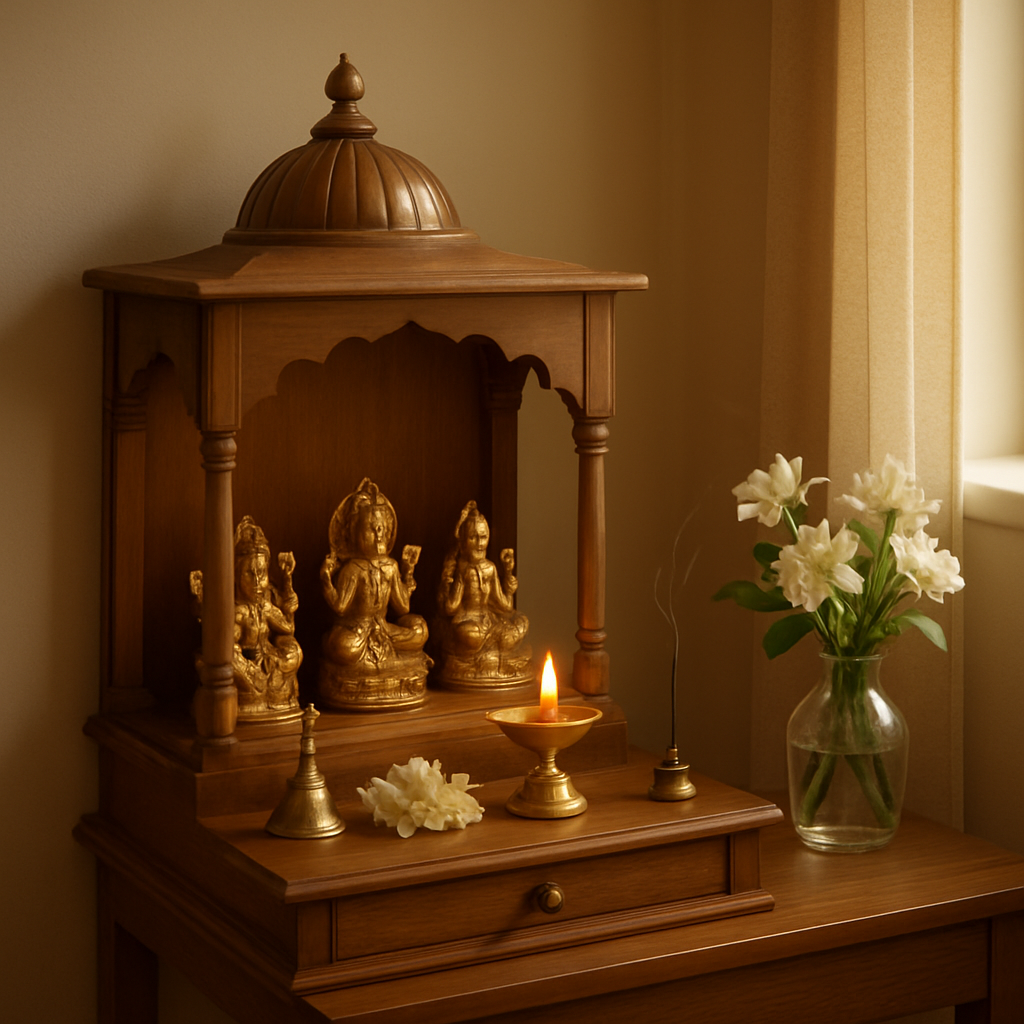
A home shrine, or pooja room, gives daily worship a dedicated and peaceful space — a fixed point in the home and the day around which devotion can gather. It need not be large or expensive; even a small, well-kept corner, a single shelf, or a modest wooden mandir cabinet can become the spiritual centre of a household.
What matters is not scale but care: a place that is clean, quiet, and set apart for the divine. This guide covers where to place a shrine, how to arrange it, how to adapt when space is tight, and the simple discipline that keeps it sacred over time.
Choosing the direction
Traditional Vastu guidance favours the northeast (Ishanya) corner of the home for a shrine — the direction associated with light, clarity, and the divine. The worshipper ideally faces east or north during prayer, so the shrine is arranged on the western or southern wall of that corner accordingly.
These are guidelines, not rigid rules. If the northeast is not available, choose a clean, quiet spot away from the bustle of the kitchen and bathroom, where the family can sit undisturbed. A sincere, well-tended shrine in a less-than-ideal direction is far better than a neglected one in the perfect spot. The intention behind the space matters more than its compass bearing.
Arranging the space
Place the principal deity at the centre, slightly elevated above the other images, so the eye and the worship naturally settle there. Keep the lamp, bell, incense holder, and a small vessel for offerings within easy reach, ideally to the right. A small mat or low seat for the worshipper completes the arrangement.
Resist the urge to crowd the shrine. A few well-chosen images, kept clean and uncluttered, hold the attention far better than a dense gallery of pictures and idols. Leave a little clear space around the principal deity; that breathing room is itself part of the reverence.
Shrines for small homes and apartments
A dedicated pooja room is a luxury many homes do not have, and the tradition adapts gracefully. A wall-mounted wooden mandir, a single dedicated shelf, or a small cabinet in a quiet corner all work well. In compact apartments, a closed cabinet has the added benefit of keeping the shrine clean and allowing it to be respectfully closed when not in use.
The same principles apply at any scale: a little elevation, a clean surface, the lamp and offerings within reach, and a spot where the worshipper can sit comfortably for a few minutes each day.
Keeping it sacred
A shrine becomes sacred through how it is treated. Clean it daily — wiping the surfaces, refreshing the water and flowers, and trimming the lamp. Keep footwear well away, and avoid using the space for anything unrelated to worship. Approach it with washed hands and a settled mind.
This simple, repeated discipline is what distinguishes a shrine from a shelf of ornaments. Over weeks and months it builds a felt atmosphere of stillness and devotion — the quality that makes a home shrine the heart of the household.