Silk Garments for Worship
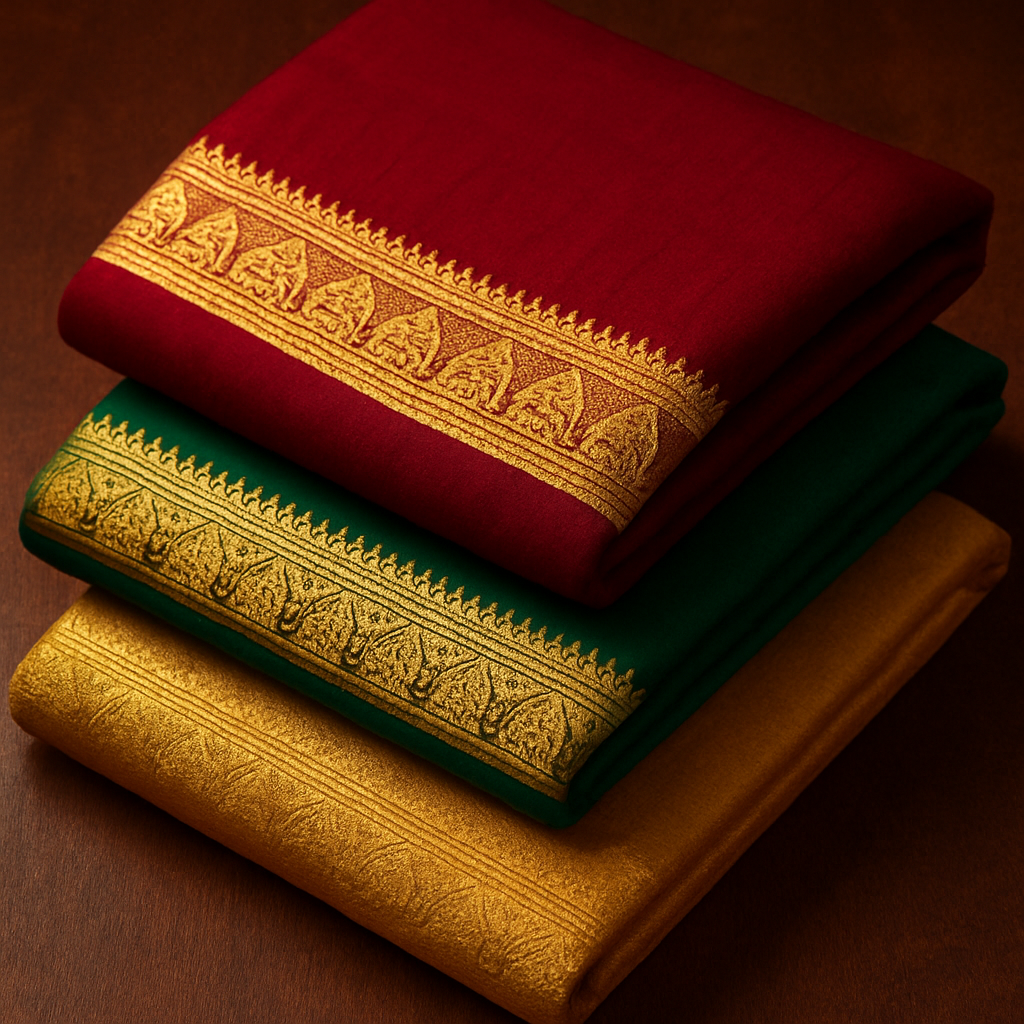
Fine silk garments hold a special place in worship. They adorn the deity during alankaram, the daily decoration of the image, and they clothe the devotee for festivals, weddings, and temple visits. In both roles, silk signals reverence — the finest cloth offered for the most sacred occasions.
Choosing silk for worship means understanding which weaves are prized, what their motifs mean, and how to tell genuine handwoven silk from machine-made imitation. This guide introduces the traditional silks and how to choose and care for them.
Traditional silk types
Kanchipuram silk from Tamil Nadu is the most celebrated of the South Indian weaves — heavy, lustrous, and famous for its contrasting borders and durability, traditionally woven from thick mulberry silk and real gold-and-silver zari. Banarasi silk from the north is prized for its fine, intricate brocade, while Mysore silk is known for its softness and understated sheen.
Each tradition has its own distinctive weaves, motifs, and character, and each is associated with particular regions and occasions. For worship and festivals, the weightier, more formal silks such as Kanchipuram are especially favoured for their richness and presence.
Motifs and borders
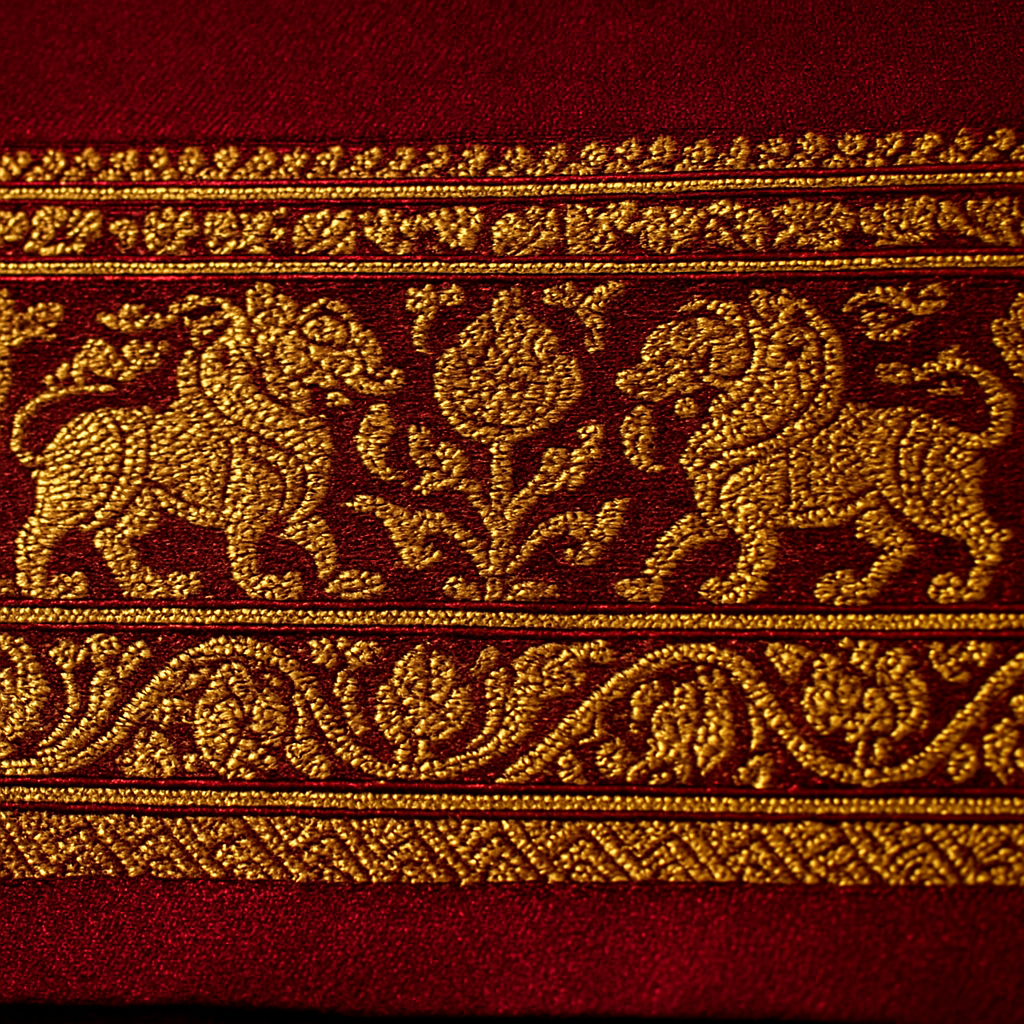
Much of a silk’s meaning lives in its borders and motifs. The temple border — a row of triangular shapes echoing temple towers — is among the most auspicious and most loved. Zari, the gold or silver thread woven into borders and pallus, adds both richness and ritual significance.
Traditional motifs carry their own associations: the mango (paisley) suggests fertility and abundance, the peacock beauty and grace, and floral and creeper patterns prosperity. Choosing a saree with motifs suited to the occasion is part of the quiet language of dressing for worship.
Choosing and caring for silk
Pure silk has a natural weight, warmth, and deep sheen that art (synthetic) silk cannot match; it also tends to make a soft, distinctive rustle and feels cool then warm to the touch. Genuine handwoven zari is woven into the cloth rather than printed on, and reputable sellers will specify the weave, the region, and whether the zari is pure.
To care for silk, store it folded in a cool, dry place away from direct light, ideally wrapped in soft cotton rather than plastic, and air it periodically to prevent damp and creasing. Dry-clean rather than wash, and refold along different lines occasionally so the same creases do not weaken the fibres. Treated well, a fine silk lasts for decades and is often handed down.
What to look for
- Pure silk with the characteristic weight and sheen
- Handwoven zari borders rather than printed imitations
- Traditional motifs appropriate to the occasion
- Colours suited to the festival or weekday of worship
- Reputable sourcing that specifies the weave and region
Where to find these
Silk sarees
Traditional handwoven silks with temple borders are favoured for worship and festive occasions.