The Meaning of Prasadam
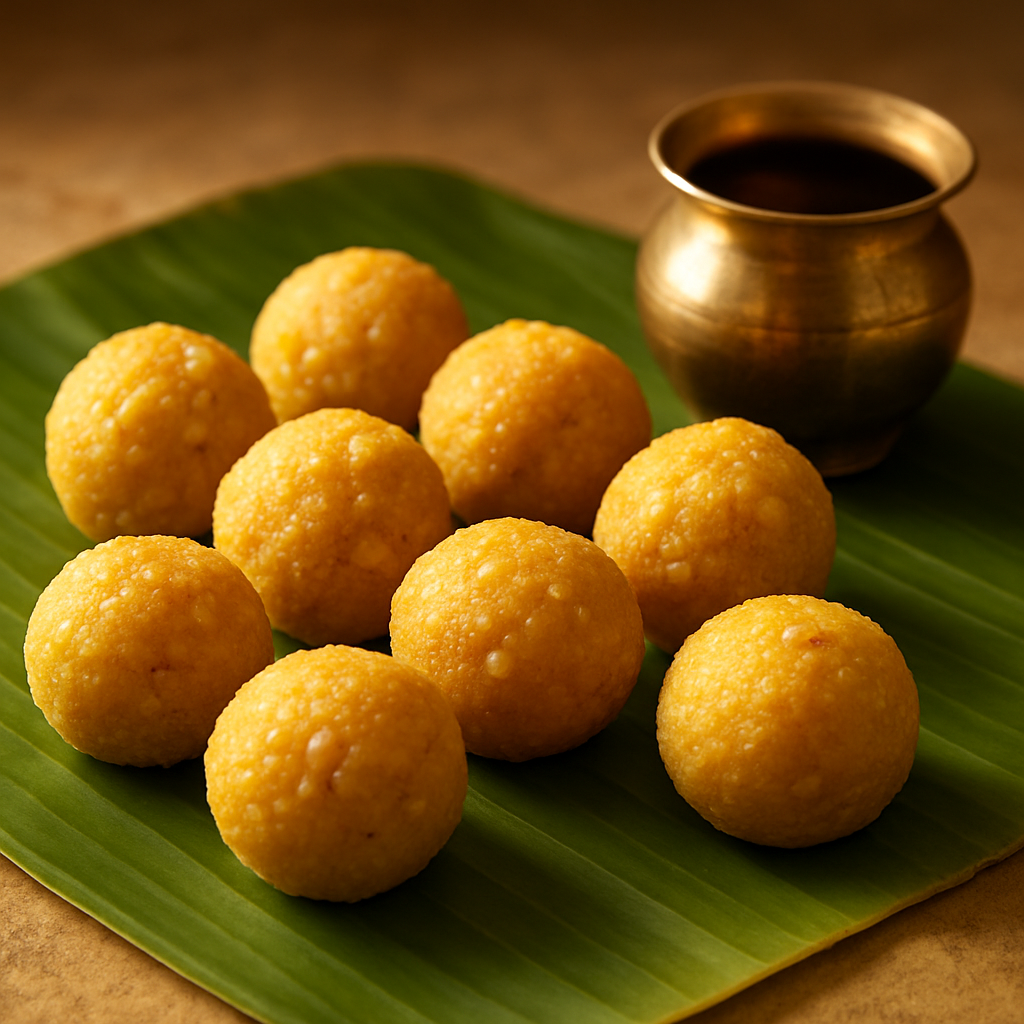
Prasadam is food that has been offered to the deity and then shared with devotees. It is far more than a snack or a souvenir — it is understood as a tangible blessing, a portion of the divine grace made edible and carried home to family and friends who could not be present.
This simple idea — that food given to God returns to us transformed — is one of the most beautiful and accessible in Hindu practice. This guide explains the concept behind prasadam, the famous laddu of Tirupati, and the etiquette of receiving and sharing it.
From naivedya to prasadam
Food prepared for worship is first offered to the deity; in this state, before the offering, it is called naivedya. The act of offering is sincere: the food is presented to the Lord as one would feed an honoured guest, with a prayer inviting him to partake of its essence.
Once it has been offered, the food becomes prasadam — literally "grace" or "favour." It is no longer ordinary food but is held to be sanctified, infused with the blessing of the deity, and only then is it distributed to devotees. The transformation is not in the food’s appearance but in its meaning: it now carries grace.
The Tirupati laddu
The famous Tirupati laddu is among the most well-known forms of prasadam in all of India, received by the millions of pilgrims who visit Tirumala each year. Prepared in vast quantities in the temple kitchens according to a closely guarded traditional recipe, the laddu is so distinctive that it has even been granted a geographical-indication status to protect its identity.
For a pilgrim, carrying the laddu home is a way of sharing the blessing of darshan with those who remained behind — a piece of Tirumala itself, distributed among family and neighbours as a token of the journey and its grace.
Receiving with respect
Prasadam is traditionally received with both hands or the right hand, accepted with a bow of the head, and consumed respectfully. Crucially, it is never wasted or treated casually — to discard prasadam is considered a disregard of the grace it carries. Even a small portion is taken with care.
Sharing prasadam carries the blessing outward to others, which is part of its purpose. To distribute it is to extend the deity’s grace beyond oneself, turning a personal act of worship into something shared. In this way the simple food becomes a thread connecting the devotee, the deity, and the wider community.