Understanding Aarti and Deepa
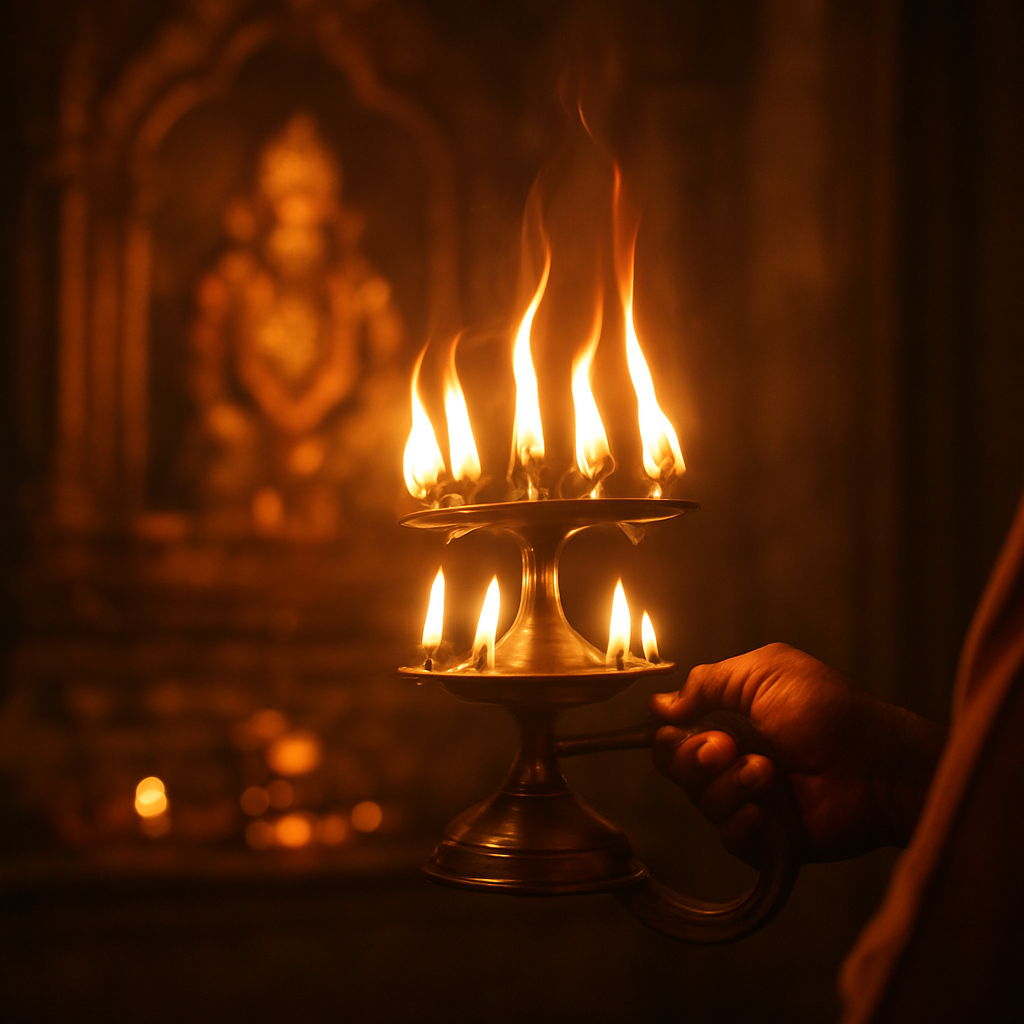
Aarti, the offering of light, is the emotional high point of most pujas — the moment when song, bell, and flame come together and the worship reaches its crescendo. The small flame circled before the deity is simple to perform, yet it carries layers of meaning built up over centuries of practice.
This guide explains the significance of deepa (the lamp), why light in particular is offered to the divine, how aarti is performed step by step, and what makes the camphor flame especially meaningful.
Why light is offered
In Hindu thought, light stands for knowledge and awareness, and darkness for ignorance. To offer a flame to the deity is to offer the light of one’s own awareness, and to ask in return for the inner darkness to be dispelled. The lamp thus expresses the whole aim of devotion in a single gesture.
After being offered to the deity, the flame is brought to the gathered devotees, who pass their hands over it and touch their eyes. This act shares the auspicious, sanctified light with everyone present — the blessing received from the deity flowing outward to the community.
How aarti is performed
The lamp or camphor flame is moved in gentle, clockwise circles before the deity — traditionally tracing the form of the deity from the feet upward to the face. A hymn is sung, often the familiar aarti songs known to the whole household, while the bell is rung to fill the space with auspicious sound.
The number of wicks on the lamp varies with the occasion: a single flame for daily worship, and elaborate multi-wick lamps for festivals. The motion should be unhurried and reverent; aarti is meant to gather and focus devotion, not to be rushed through. When it concludes, devotees receive the flame as described above.
Karpura aarti
The camphor (karpura) aarti is especially significant. Camphor burns completely and leaves no residue behind, and in this it becomes a vivid symbol: just as the camphor is wholly consumed in the flame, the devotee’s ego is meant to dissolve entirely in the divine, leaving nothing of the separate self.
For this reason the bright camphor flame often crowns the aarti and the puja as a whole. Its clean, complete burning is a small but profound teaching offered at the very close of worship — a reminder of the surrender that devotion ultimately aims at.