Vishnu Sahasranama: A Primer
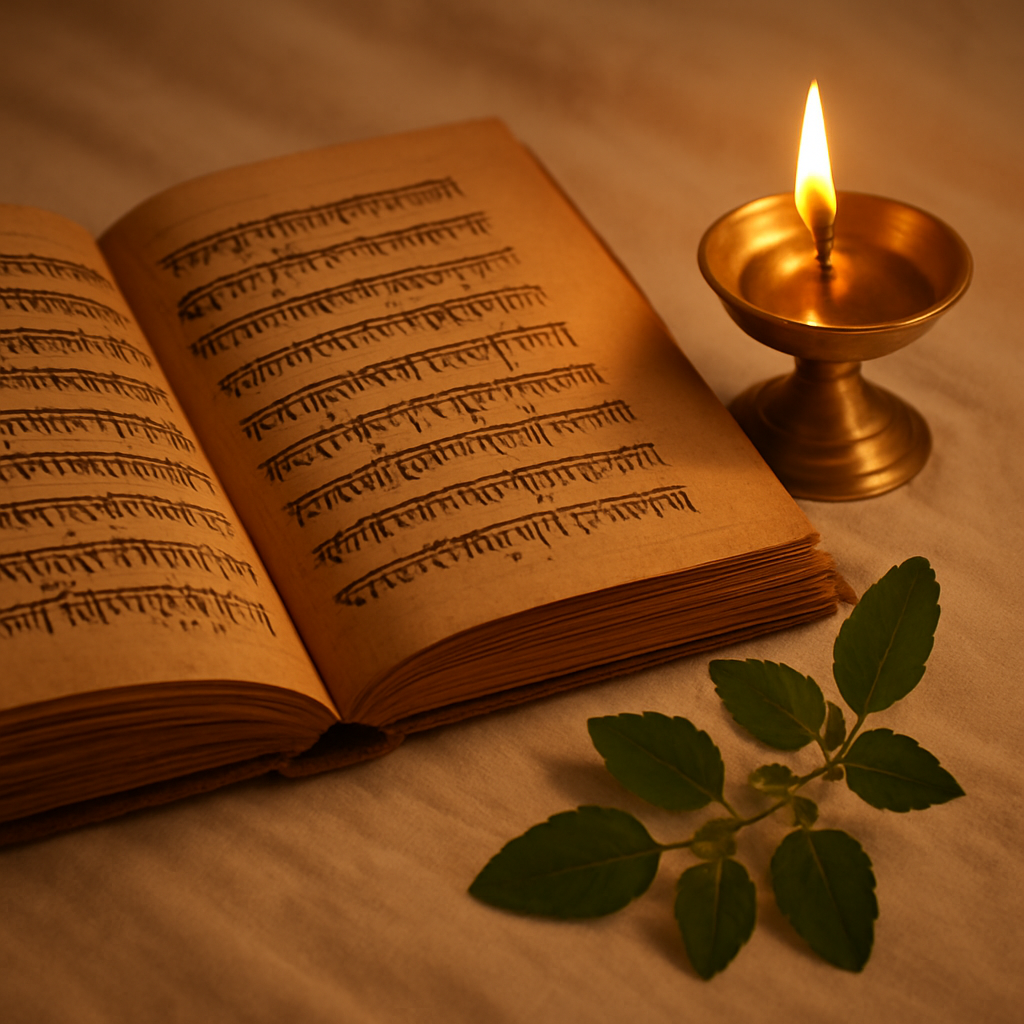
The Vishnu Sahasranama, the "thousand names of Vishnu," is one of the most widely recited Hindu texts. Its rhythmic verses are chanted in homes and temples across the world, and for many devotees a weekly recitation is a fixed and cherished part of their spiritual life.
Its appeal lies in both its beauty and its accessibility: it asks for no special initiation, and the simple act of reciting or hearing the names is held to be deeply beneficial. This guide introduces where the hymn comes from, how the thousand names are arranged, and how devotees engage with it day to day.
Origin in the Mahabharata
The hymn appears in the Anushasana Parva of the Mahabharata. In the story, the patriarch Bhishma, lying mortally wounded on his bed of arrows after the great war, is asked by Yudhishthira how a person may best find refuge and peace. In answer, Bhishma teaches the thousand names of Vishnu.
This setting gives the text its weight: it is offered as the distilled wisdom of a dying sage to a grieving king, a litany of the Lord’s names and qualities presented as the surest path to solace. Devotees often recall this origin as they recite, hearing in it Bhishma’s own counsel.
The structure of the names
The text lists one thousand names, each a single word or compound that names an aspect of Vishnu — protector, creator, sustainer, the all-pervading, the imperishable. Read together, they form a vast portrait of the divine drawn from a thousand angles, no single name exhausting the whole.
Many of the names are already familiar from everyday worship: Govinda, Madhava, Keshava, Narayana, and others recur in common prayers and bhajans. Encountering them within the Sahasranama deepens their meaning, revealing each as one facet of the Lord whom devotees address by these names daily.
How it is recited
Devotees commonly recite the Sahasranama on auspicious days — Saturdays are especially favoured by devotees of Venkateswara, along with Ekadashi and festival days. It may be chanted alone, in family groups, or in temple gatherings, and is often preceded by a short dhyana (meditation verse) and followed by the phala shruti.
The phala shruti is the closing portion that describes the benefits, or fruits, of recitation — peace of mind, protection, and spiritual merit. Whether recited in full Sanskrit or simply listened to with attention, the tradition holds that sincere engagement with the names is itself complete and fruitful.