Choosing a Venkateswara Murti for Your Home
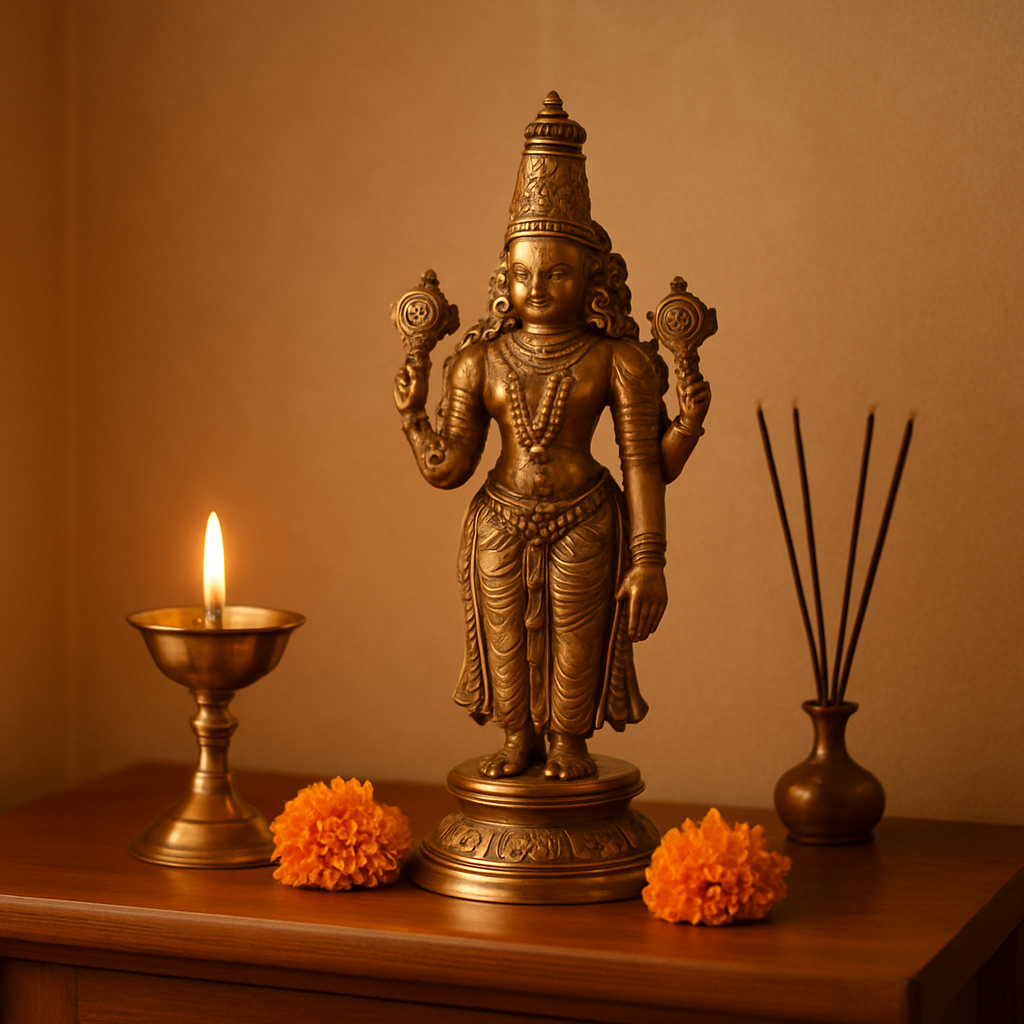
Bringing a murti of Lord Venkateswara into your home is a meaningful step. Unlike an ordinary decorative object, the right image becomes the focal point of daily worship for years — the place where the family gathers to light a lamp, offer a prayer, and mark the rhythms of life. It is worth choosing thoughtfully rather than quickly.
The good news is that the choice is not complicated once you know what to weigh. This guide walks through the four practical considerations — material, size, posture, and authenticity of the iconography — then covers placement and care, and ends with where devotees commonly find quality murtis. Throughout, the aim is a murti you will be glad to worship before for many years.
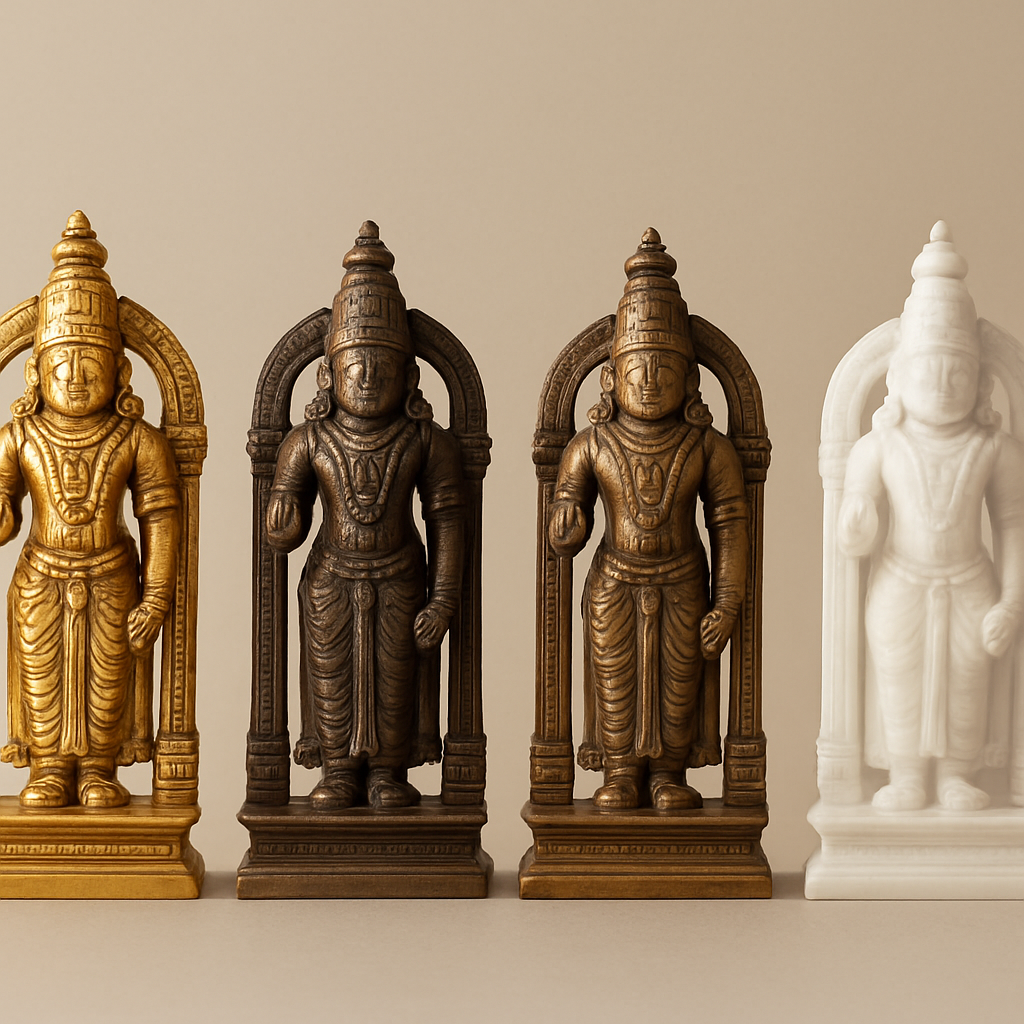
Material: brass, panchaloha, bronze, marble
Material is usually the first decision, and it shapes both the look and the upkeep of the murti. Brass is the most popular choice for home shrines: it is durable, affordable, holds fine detail well, and is easy to maintain with occasional polishing. For most families a well-cast brass murti is the natural choice.
Panchaloha — a traditional five-metal alloy — is the classical material for murtis intended for formal consecration and lifelong worship; many devotees prefer it when the image will be the principal deity of the shrine. Bronze offers a darker, antique character. Marble and carved stone suit larger, fixed installations where the murti will not be moved, while resin or composite images are an inexpensive entry point.
If you are unsure, brass is the safe, traditional default: it balances cost, longevity, and the ease of day-to-day care that a home shrine demands.
Size and posture
Choose a size in proportion to your shrine space. Many homes are well served by a murti between six and twelve inches: large enough to be the clear focus of worship, small enough to sit comfortably among the lamp, bell, and offerings without crowding them. Measure your shrine before buying, and remember that a murti needs clear space around it, not just enough to fit.
Venkateswara is most often depicted standing upright in the samabhanga posture, with the lower hand pointing toward his feet — the gesture of refuge. This standing form mirrors the deity of the Tirumala sanctum and is the most traditional choice for the home. Seated forms exist but are less common for Venkateswara specifically.
Make sure the murti sits stably on a flat base, and that its scale lets the worshipper meet the deity’s gaze comfortably when seated or standing before the shrine.
Verifying the iconography
Because the iconography carries the deity’s meaning, an accurate murti matters. A faithful Venkateswara murti shows the Sudarshana chakra and Panchajanya shankha in the upper two hands, the urdhva pundra namam on the forehead, the lower hands in the gestures of grace and refuge, and the characteristic tall crown and ornaments.
Before you buy — especially online — look closely at clear photographs of the face and hands. Mass-produced images sometimes blur or omit these details. Checking them ensures you are getting a true representation of the Lord rather than a generic figure, and it is the single best safeguard of quality.
Placement, consecration, and care
Traditionally the shrine is arranged so that the worshipper faces east or west during prayer, with the murti slightly elevated and the principal deity at the centre. Many families perform a simple prana pratishtha or invocation when first installing the murti; for an elaborate consecration, a priest can be invited, though sincere daily worship is what truly enlivens the image for most households.
Care is straightforward. Keep the murti and its surroundings clean, keep footwear away from the shrine, and reserve the space for worship. Brass can be gently polished from time to time to restore its lustre; avoid harsh abrasives that scratch the detailing. Treated with this simple discipline, a good murti will serve the family’s devotion for a lifetime.
What to look for
- Solid, well-balanced casting with clean detailing on the face and ornaments
- Correct iconography: chakra, shankha, namam, and crown clearly rendered
- A size proportionate to your shrine — typically 6–12 inches for a home
- A flat, stable base so the murti stands securely
- A material suited to your needs — brass for daily home worship, panchaloha for consecrated worship
Where to find these
Brass Venkateswara sculptures
Brass is durable, traditional, and well suited to daily abhishekam-free worship at home.
Browse all Venkateswara murtis
Compare postures, sizes, and materials side by side before choosing.