Home Puja Essentials Explained
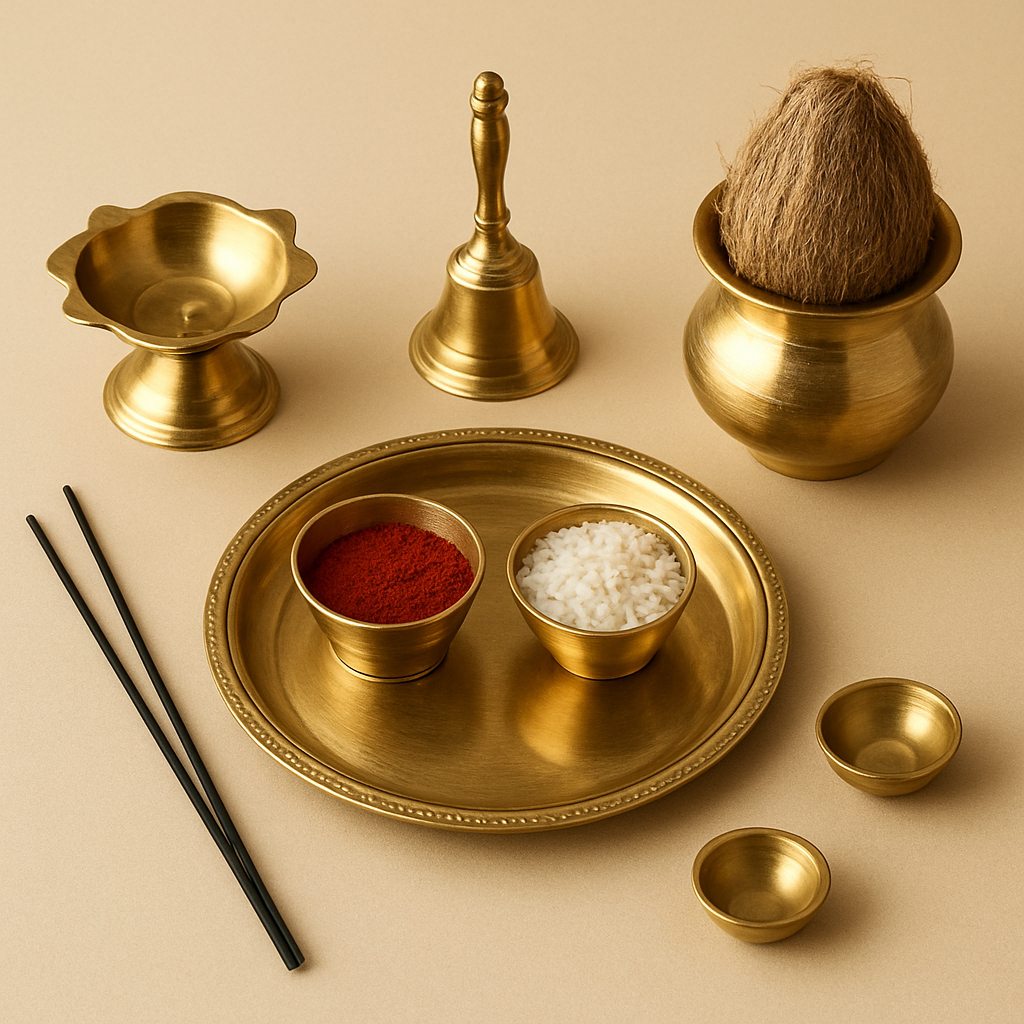
A home puja uses a surprisingly small set of traditional items, each with its own purpose and meaning. Far from being mere accessories, these objects are the working vocabulary of worship — the means by which the abstract act of devotion takes concrete shape. Understanding what each item is, and why it is used, makes worship more meaningful and takes the confusion out of assembling a kit.
You do not need everything at once. A lamp, a bell, incense, and a small thali are enough to begin; the rest can be added over time. This guide explains the essentials one by one, then points to where devotees source quality, long-lasting pieces.
The lamp (diya)
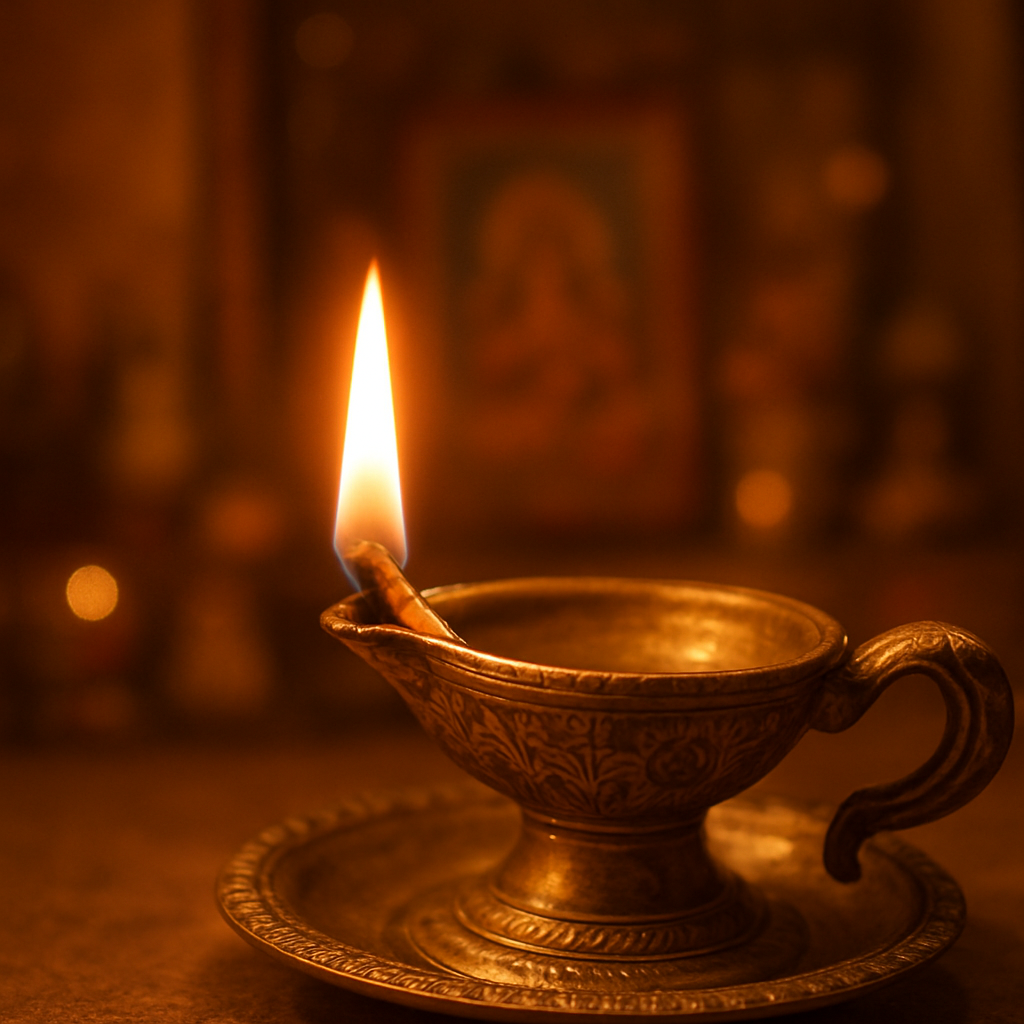
The oil lamp stands at the very centre of puja. Its flame symbolises the light of knowledge dispelling the darkness of ignorance, and lighting it is traditionally the first act of worship and extinguishing it among the last. For this reason the diya is the one item no home shrine should be without.
Brass lamps are traditional and exceptionally durable, lasting for generations with simple care. Use cotton wicks with sesame oil or ghee, both of which burn cleanly and are considered auspicious. A single-wick lamp suffices for daily worship; multi-wick lamps are kept for festivals and special occasions.
Bell, incense, and camphor
The bell (ghanti) is rung at the start of worship and to mark its stages. Its sound is said to invite auspiciousness, drive away negativity, and signal the devotee’s readiness — a small act that focuses the mind on the ritual at hand.
Incense (dhoop or agarbatti) is offered for its fragrance, representing the offering of a purified atmosphere to the deity. Camphor (karpura) is reserved for the concluding aarti, where its bright, residue-free flame carries special meaning. Together, sound and fragrance and flame engage the senses and lift the worship beyond words.
Vessels and the thali
A puja thali — a flat tray — keeps the smaller items organised and within reach: kumkum and turmeric, akshata (rice coloured with turmeric), flowers, and the tiny implements for water offerings. Chief among these are the panchapatra (a small cup holding sanctified water) and the uddharani (a little spoon used to offer it). A flower or two and a few grains of rice complete a typical tray.
For special occasions a kalash — a metal pot filled with water and topped with mango leaves and a coconut — represents abundance and the presence of the divine. It is not needed for daily worship but is central to festivals and ceremonies.
Assembling your kit
Begin modestly: a brass lamp, a bell, incense, and a thali with the small vessels are enough for a complete daily puja. Choose solid brass over thin, lightweight pieces — it lasts far longer and ages beautifully. As your practice grows, add a kalash, a multi-wick lamp, and a dedicated camphor holder for aarti.
Matching the finish of your pieces gives the shrine a cohesive, cared-for appearance, but function matters more than uniformity. The goal is a kit you will actually use each day, built to last for years of worship.
What to look for
- Solid brass construction for lamps and vessels that last for years
- A lamp size suited to your shrine and daily use
- A bell with a clear, pleasant tone
- A thali large enough to hold your regular offerings
- Pieces that match in finish for a cohesive shrine
Where to find these
Brass puja items & lamps
Brass lamps and vessels are the traditional, long-lasting choice for daily worship.
Puja item collection
Find diyas, bells, and vessels to assemble a complete home puja kit.