Rudraksha and Tulsi Malas Explained
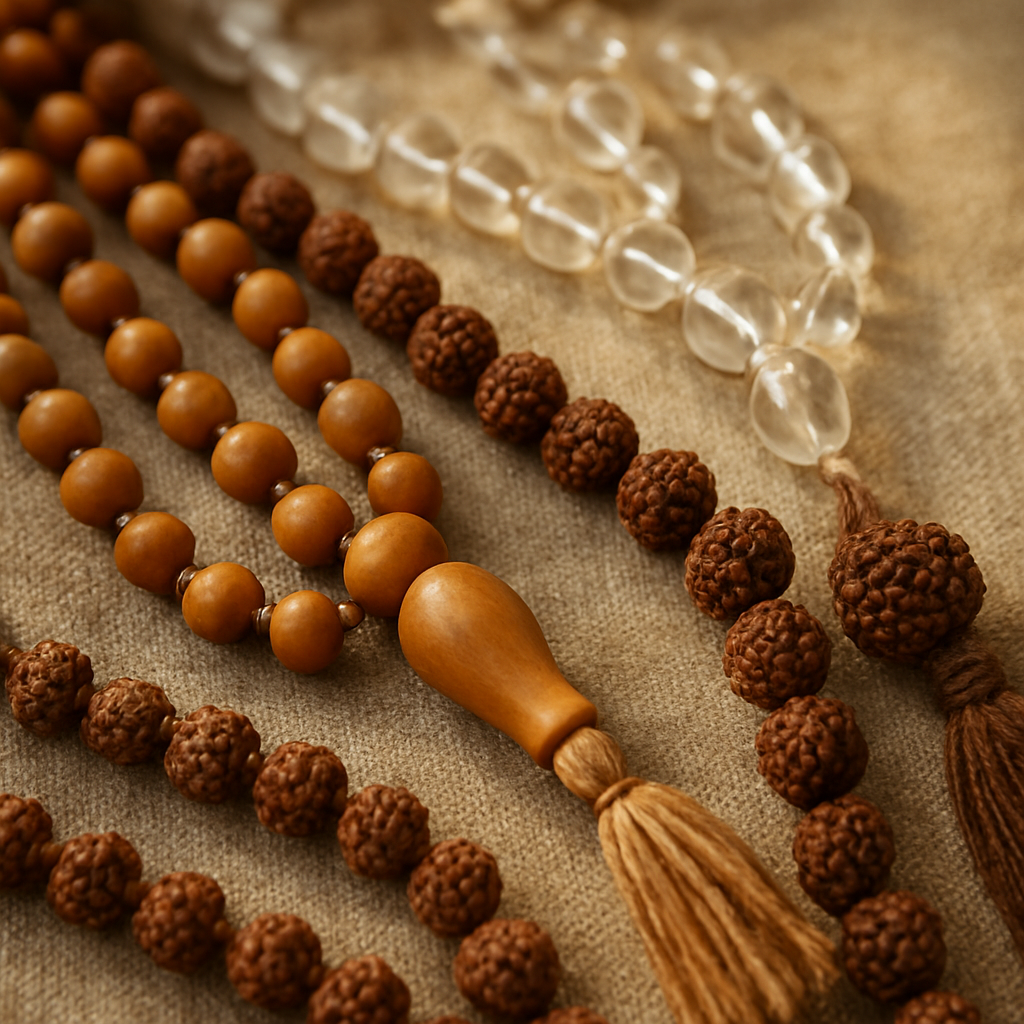
A mala is far more than a string of beads. It is at once a practical aid — counting the repetitions of japa so the mind can rest on the mantra — and a sacred object that becomes, over years of use, a close companion in a devotee’s practice. Different beads carry different associations, and the choice of mala says something about the tradition a person follows.
Choosing well, and caring for the mala afterwards, turns it into something kept for a lifetime and sometimes handed on. This guide explains the most common malas — above all tulsi and rudraksha — the other materials in use, and how to recognise a genuine, well-made mala worth keeping.
Tulsi and rudraksha
For Vaishnavas — devotees of Vishnu and Venkateswara — the tulsi (holy basil) mala is the traditional choice. Tulsi is regarded as sacred to Vishnu, and beads turned from its wood are considered especially fitting for chanting his names. They are light, warm to the touch, and prized precisely for their association with the Lord.
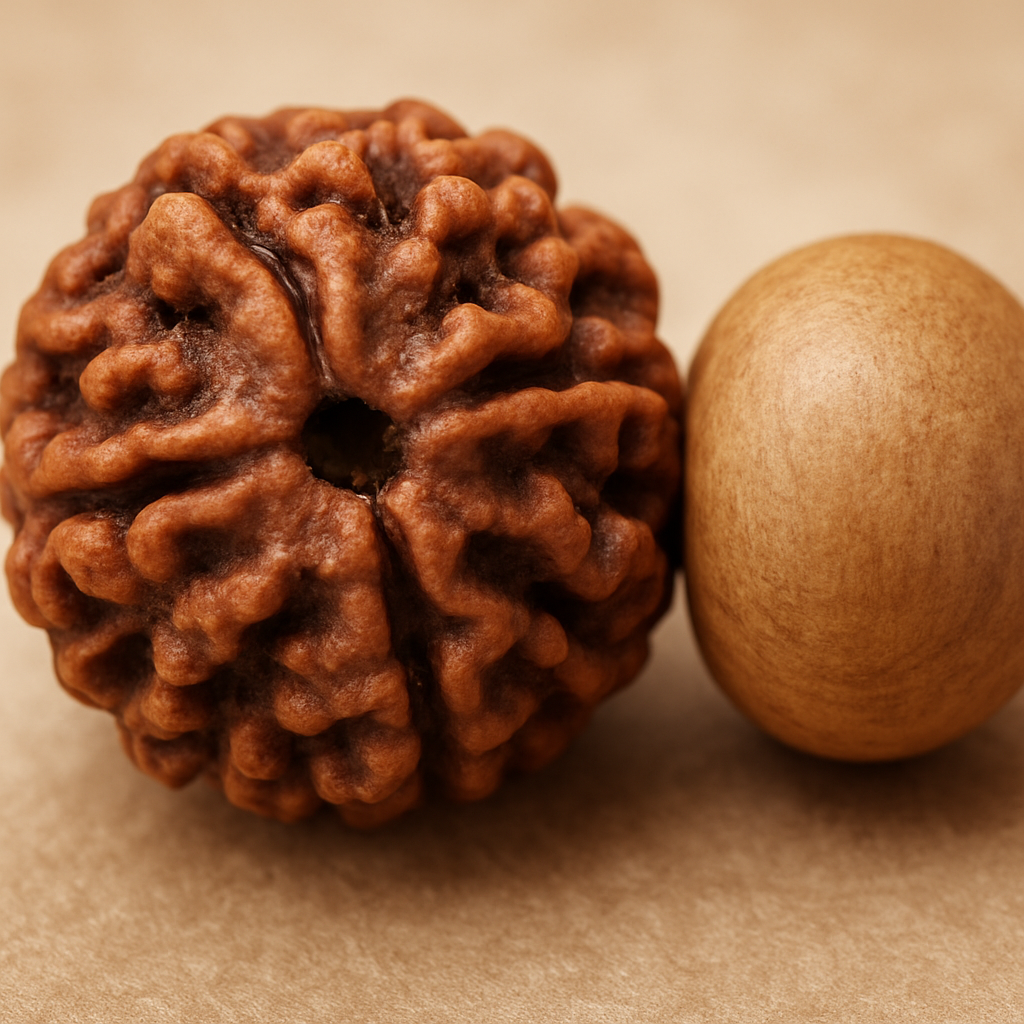
Rudraksha beads, by contrast, are linked above all with Shiva. They are the seeds of the rudraksha tree, and each bead is graded by its mukhi — the number of natural faces, or clefts, running across its surface. Different mukhi counts carry different traditional meanings, and a clean, well-formed face is one mark of a genuine bead. Though associated with Shiva, rudraksha is used widely across traditions for japa.
Other materials
Beyond tulsi and rudraksha, several other materials are valued for japa, each for its own qualities. Sphatik (clear quartz crystal) malas are cool to the touch and prized for a calming, steadying effect in meditation. Sandalwood malas carry a natural fragrance that deepens with use and are favoured for their soothing aroma during long sessions.
Other beads — such as those of red coral or various sacred woods — appear in particular traditions and for particular mantras. The choice is partly devotional and partly practical: the material should suit the practice and feel right in the hand, since the mala will be turned thousands of times.
Choosing and caring for a mala
A well-made mala has beads that are evenly sized and matched, cleanly drilled, and strung on a strong cord, finished with a securely tied meru — the larger "head" bead that marks the start and end of a round. Natural material is preferable to dyed or plastic imitation; genuine tulsi and rudraksha have a natural grain and irregularity that uniform, glossy fakes lack.
Once chosen, a mala is traditionally kept clean and reserved for your own practice rather than handled casually by others. Many devotees store it in a small cloth bag and avoid letting it touch the floor. Treated with this care, a mala becomes charged with the practice itself, and a familiar, steadying presence each time it is taken up.
What to look for
- Even, well-matched beads with clean drilling
- A securely finished meru (head) bead and knotting
- Tulsi for Vaishnava worship; genuine graded rudraksha if chosen
- Natural material rather than dyed or plastic imitations
- A bead size comfortable for your fingers during japa
Where to find these
Prayer beads & malas
Tulsi malas are traditional for Vishnu devotees; look for even beads and a well-finished meru.