Understanding Tanjore Paintings
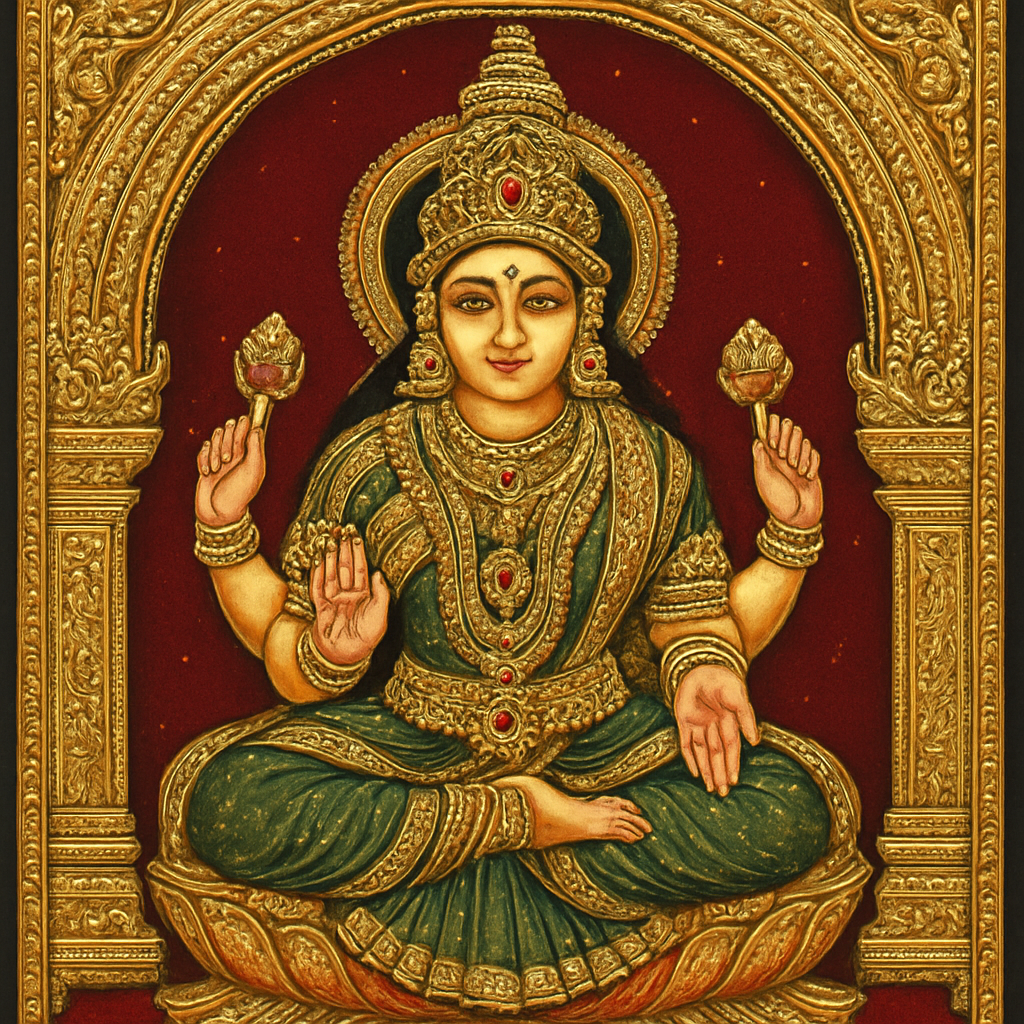
Tanjore (Thanjavur) paintings are instantly recognisable for their rich gold leaf, jewel-like colours, and serene devotional subjects. The tradition takes its name from the temple town of Thanjavur in Tamil Nadu and flourished centuries ago under royal patronage, developing the distinctive opulent style still made by artisans today.
For a buyer, the appeal is obvious — but so is the risk of mistaking a mass-produced print for genuine handwork. This guide explains the craft that makes a Tanjore painting special, the subjects it favours, and the concrete signs that separate an authentic piece from an imitation.
The technique
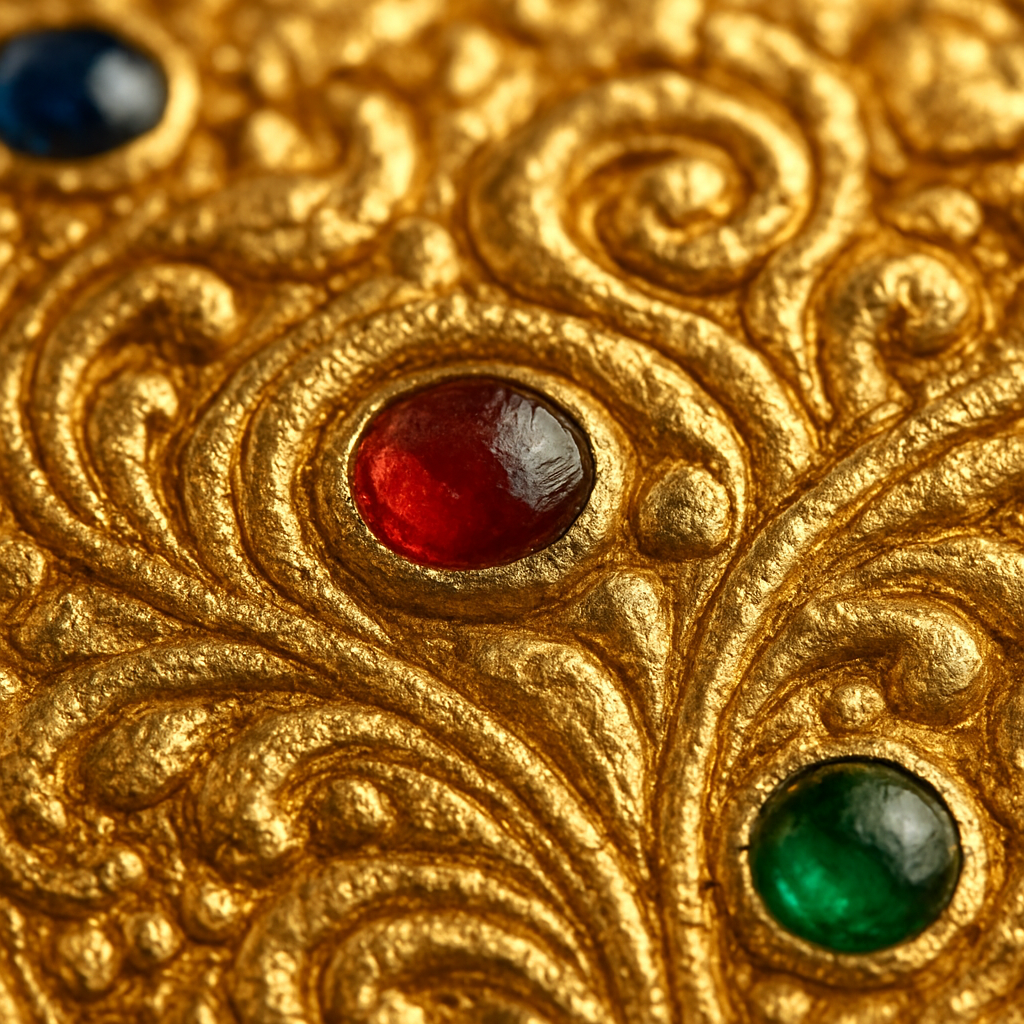
Authentic Tanjore paintings are built up in layers. The artist begins with a drawing on a cloth-covered board, then creates raised areas — crowns, jewels, borders — using a gesso paste. Over this relief, genuine gold foil is applied, and semi-precious or glass stones are set into the surface by hand.
It is this combination of real gold leaf and three-dimensional relief that gives the finished work its characteristic depth and shimmer. The gold does not merely depict ornament; it physically catches and throws the light as the viewer moves, so the deity seems to glow from within. This tactile, light-playing quality is the soul of the form.
Common subjects
Deities are the heart of the tradition. Venkateswara (Balaji), Lakshmi, Krishna — especially as the infant Bala Krishna — Rama, and Saraswati are among the most beloved subjects. The deity is typically shown frontally, gazing directly at the viewer, framed within an ornate arch or pavilion thick with gold.
This frontal, iconic composition is deliberate: a Tanjore painting is made for worship as much as for decoration. Placed in a pooja room or a prominent wall, the directly-gazing deity invites the same darshan — the meeting of eyes between devotee and divine — that a temple image offers.
Genuine versus printed
The market is full of printed reproductions that imitate the golden look at a fraction of the cost. The difference is easy to feel and, with a little attention, to see. A genuine piece has tactile relief — you can run a finger over the raised gold ornament — and the foil and stones are individually applied, so they catch light unevenly and naturally.
A print, by contrast, is flat and uniform; the "gold" is simply ink or a metallic film, and the "gems" are printed dots. When buying online, look for clear close-up photographs that reveal genuine relief and set stones, and favour sellers who specify that the gold is real foil over gesso.
Choosing and caring for a piece
Match the size to its setting: a smaller painting suits a pooja room or shelf, while a larger one can anchor a living-room wall. A sturdy, well-made frame protects the relief and the foil, which are more delicate than ordinary paint.
Once hung, keep a Tanjore painting out of direct sunlight and away from damp, both of which can damage the gesso and dull the gold over time. Dust it gently and never with moisture. Treated with this modest care, a genuine Tanjore painting is an heirloom that holds its lustre for generations.
What to look for
- Real gold foil with raised gesso relief you can feel
- Hand-set glass or stone inlay rather than printed sparkle
- Crisp, traditional iconography of the chosen deity
- A sturdy frame appropriate to where it will hang
- A size suited to a pooja room or living-room wall
Where to find these
Tanjore paintings
Look for genuine gold-foil work and raised gesso detailing rather than printed reproductions.